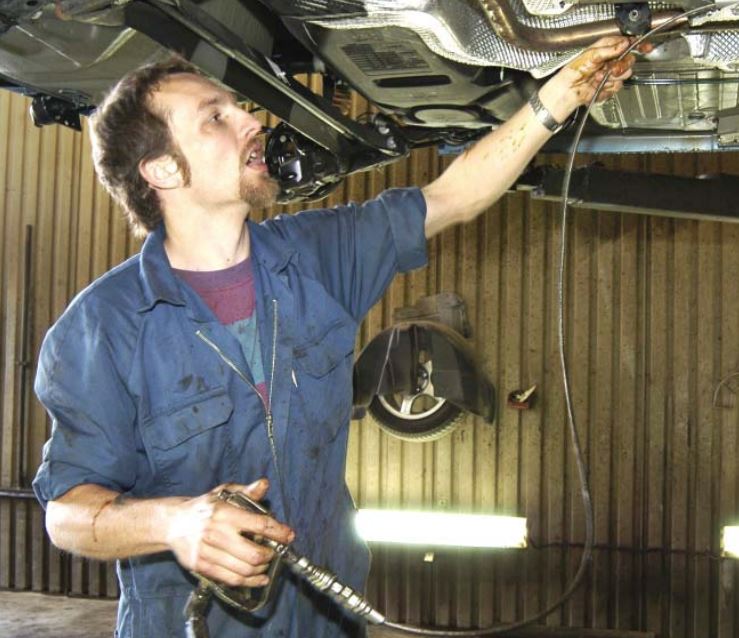
Injecting your vehicle with cavity wax.
Cavity waxes are specially manufactured fluid waxes to inhibit rust and waterproof the insides of vehicle box sections, Lanolin based rustproofing solutions also have the benefit of hermetically sealing the surface from oxygen. But why do we need to rustproof these areas?
The rust that forms within a crevice or seam within a hidden cavity can corrode at up to 400 times faster than corrosion on open surfaces, once humidity enters the oxygen starved crevice this rate of corrosion is just about guaranteed. Soaking these cavities in a penetrating fluid and cavity wax is simply necessary but with a word of caution,
A poorly injected cavity could rust more than one that has not been injected at all. How?
The un-coated steel within the cavity has a greater potential to rust than the coated steel around it due to all of the electrolytic action being focused on these bare spots. Poor injection equipment and particularly finger operated pumps will not atomise the wax sufficiently and you will get uncoated spots (holidays) within the coating.
You will get similar results using a wax that does not flow or is not easily atomised.
If you have to thin a wax then the final barrier film thickness will be reduced by the amount of thinner you add , 30% white spirit will reduce your dry film thickness by 30%. Heating the wax allows the product to naturally reduce in viscosity and when cool it will re-thicken, using correct equipment will give you good penetration and a good film thickness, perfect for cavity injection.
So how do I inject the cavities of my vehicle?
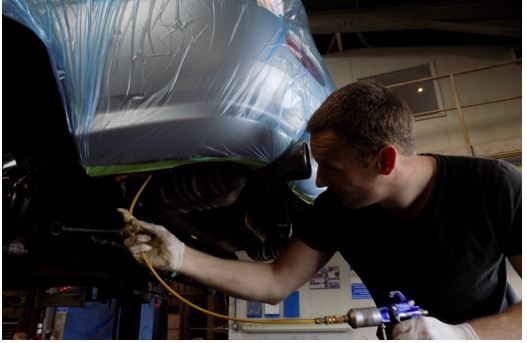
The professional Wax Injection kit from Rustbuster comes with ,
- Quality spray gun.
- Sturdy metal cup.
- 800mm x 360 degree cavity wax injection wand.
- Hook spray wand for spraying cavity wax in a fan pattern at 90 degrees.
- A specially manufactured Rustbuster bullet tip for fine spraying of higher build underbody waxes.
For injection of the cavities, we are going to focus our attention on the 800mmx 360° Injection Wand. And for the purposes of this blog, we will also assume your chosen cavity wax has been heated to a minimum 40°c, you have a suitable compressor running 6-8cfm and 60-90psi.