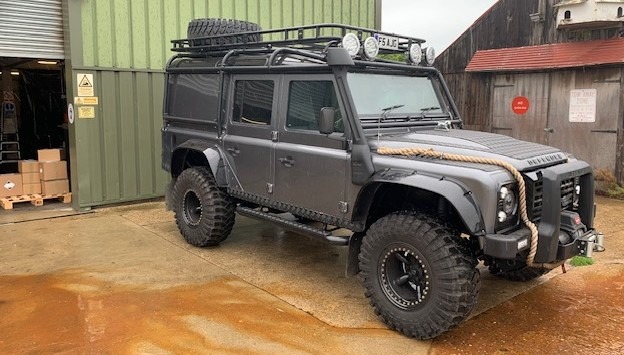
I’m sure it doesn’t surprise you to know that the number 1 vehicle we’ve rustproofed in-house over 30 years is the land Rover Defender, you all know why!
Few vehicles are as capable — or as vulnerable to corrosion — as the Land Rover Defender. Whether it’s a classic 90, 110 or later Td5 model, rust is one of the biggest long-term threats to the vehicle’s chassis and bodywork.
The good news is that with the right preparation, coatings and maintenance, Defender corrosion can be slowed dramatically and expensive structural repairs avoided. At Rustbuster, we’ve spent decades helping owners protect and restore vehicles exposed to harsh UK weather, road salt, mud and moisture.
Why Defenders Rust So Badly
The Land Rover Defender’s design makes it an incredibly durable, light (ish) aluminium panelled off-road monster, but several construction details trap moisture, mud and road salt. Over time, this trapped contamination accelerates corrosion and leads to the breakdown of critical structural areas including the chassis rails, rear crossmember, bulkhead and outriggers.
Galvanic Corrosion
One of the Defender’s biggest long-term issues is galvanic corrosion.
The aluminium body panels sit against a steel chassis and steel support structures. Whenever dissimilar metals meet in the presence of moisture and oxygen, an electrochemical reaction occurs. Over time, the steel oxidises and corrodes rapidly unless properly isolated and protected.
This is why bubbling around hinges, door frames and fixings is so common on older Defenders.
Trapped Moisture & Debris
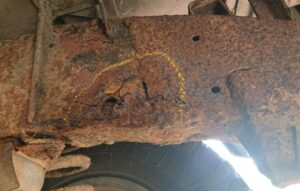
The Land Rover Defender’s box-section steel chassis and layered steel bulkhead contain numerous cavities, seams and folds that trap mud, wet leaves, road salt and moisture. During rustproofing treatments at Rustbuster, it’s common for us to flush surprising amounts of compacted mud and debris from inside chassis rails, crossmembers and outriggers — especially on vehicles that have seen regular off-road use or winter driving.
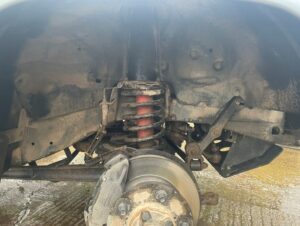
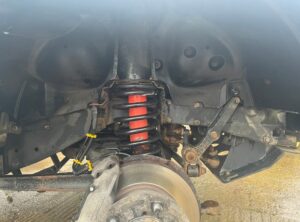
In many cases, the outside of the chassis can appear reasonably solid while the inside contains years of trapped wet debris slowly corroding the steel from within. This is why thorough cleaning and internal cavity protection are such important parts of long-term Defender preservation.
- mud
- wet leaves
- road salt – Remember washing with water alone won’t fully remove this, you’ll need a Salt remover like Chlor-X
- standing water
These areas remain damp for extended periods, especially during UK winters and off-road use.
Major Problem Areas
- Box section chassis rails hold mud and water
- Rear crossmembers collect road spray
- Drainage points block easily
- Outriggers trap wet debris
- Bulkhead seams hold moisture internally
Many owners only discover serious corrosion once MOT advisories appear or paint bubbling becomes visible.
Inadequate Factory Rust Protection
Factory rust protection on classic Land Rover Defender models was historically very limited by modern standards. Most vehicles left the factory with little more than basic primer coatings and black chassis paint, offering only modest protection against moisture, mud and winter road salt.
Unlike many fully restored or aftermarket replacement chassis available today, original production Defender chassis were not hot-dip galvanised from the factory. This left the internal box sections, seams, welds and structural mounting points highly vulnerable to corrosion — particularly in harsh UK conditions where wet weather and salted roads accelerate rust development.
Factory-applied coatings were often:
- thin
- inconsistent
- poorly sealed inside cavities
This left exposed steel vulnerable to corrosion very early in the vehicle’s life.
The Structural Backbone Problem
The chassis and bulkhead are effectively the Defender’s structural backbone.
The bulkhead consists of multiple spot-welded steel layers where moisture can enter hidden joints and begin corroding the metal internally. Rust often spreads unseen long before external damage appears.
Once corrosion reaches structural areas, repairs become expensive and labour intensive.
Common Rust Areas on a Defender
Chassis Rails
The chassis rails are one of the most important areas to inspect and protect.
Common Problems
- Internal corrosion inside box sections
- Flaking rust around welds
- Salt contamination
- Moisture trapped inside rails
- Corrosion near suspension mounts
The inside of the chassis is often significantly worse than the visible exterior.
Recommended Protection
For long-term chassis preservation:
- Rustbuster FE-123 Rust Converter
- Rustbuster Armaguard Epoxy Mastic
- High-performance cavity wax
- Chassis injection lance systems
Internal cavity waxing is one of the most effective preventative treatments for Defender ownership.
Rear Crossmember
The rear crossmember is one of the most commonly replaced Defender components.
Why It Rusts
- Constant road spray
- Mud build-up
- Water trapped internally
- Towbar stress
- Salt exposure during winter
Signs of Corrosion
- Bubbling paint
- Rust around towing electrics
- Weak jacking points
- MOT corrosion advisories
- Flaking seams
Recommended Products
- FE-123 Rust Converter
- EM121 Epoxy Mastic
- Rustbuster cavity wax systems
- Underbody protection coatings
Bulkhead Corrosion
Bulkhead replacement is one of the largest restoration jobs on a Defender.
Vulnerable Areas
- Footwells
- Door hinge mounts
- Windscreen corners
- Vent panel edges
- Lower seams
Common Symptoms
- Water leaks into cabin
- Bubbling paint
- Rust staining
- Cracking around hinges
Protection Advice
After rust removal:
- Apply epoxy primer or epoxy mastic
- Seal all seams correctly
- Inject cavity wax into hidden voids
- Keep drainage channels clear
Defender Doors
Although the outer skins are aluminium, the internal door frames are steel and highly vulnerable to corrosion.
Typical Problems
- Bubbling along lower edges
- White oxidisation around fixings
- Internal frame rust
- Swelling beneath paint
- Water trapped inside doors
Prevention Tips
- Keep drain holes clear
- Apply cavity wax inside frames
- Treat internal seams before rust spreads
Outriggers
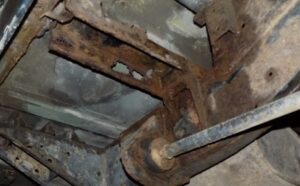
Outriggers support structural and drivetrain components underneath the vehicle.
Common Issues
- Stone chip damage
- Road salt attack
- Mud retention
- Corrosion around welds
Severe corrosion here can lead to MOT failure because these are structural mounting points.
Recommended Protection System
For best results:
- Remove loose corrosion
- Degrease thoroughly
- Apply FE-123 Rust Converter
- Coat with EM121 Epoxy Mastic
- Finish with underbody wax protection
Battery Boxes
Battery boxes commonly trap moisture beneath the seats.
Common Problems
- Water retention
- Battery tray corrosion
- Floor rot
- Acid contamination
These areas should be cleaned and wax protected regularly.
Footwells
Footwells are highly exposed to water ingress from:
- wheel spray
- leaking seals
- blocked drainage
Corrosion often begins in the lower corners and spreads internally.
Conclusion
The Land Rover Defender remains one of the most iconic and capable off-road vehicles ever built, but corrosion has always been one of its greatest weaknesses. From chassis rails and rear crossmembers to bulkheads, outriggers and door frames, the Defender’s traditional construction and minimal factory rust protection leave many structural areas vulnerable to long-term rust damage.
Over the years at Rustbuster, we have seen first-hand how mud, moisture and road salt become trapped deep inside Defender chassis sections, often causing severe hidden corrosion long before problems appear on the surface. Proper cleaning, cavity waxing and the use of high-quality epoxy rustproofing systems are essential if you want to preserve the structural integrity and long-term value of your Defender.
Whether you are maintaining a daily driver, restoring a classic Defender or protecting a freshly rebuilt chassis, investing in professional-grade rustproofing products and preventative maintenance can dramatically extend the life of the vehicle and reduce future repair costs.
As specialists in rust prevention and vehicle restoration coatings for over 25 years, the team at Rustbuster can help you choose the right rustproofing system for your Defender project — from rust converters and epoxy mastics to cavity waxes and complete chassis protection solutions. Contact us today for expert advice and keep your Defender protected for years to come.